
 Written by SKS HospitalsUpdated November 21, 2026
Cloudy, blurry, or faded vision can make everyday tasks like reading, driving or recognising faces harder. If your eye doctor has said you have a cataract, you’ve probably heard about laser cataract surgery and wondered if it’s better than the standard operation.
This guide explains what laser cataract surgery is, how it compares with phaco surgery and SICS, who it suits, and what recovery looks like.
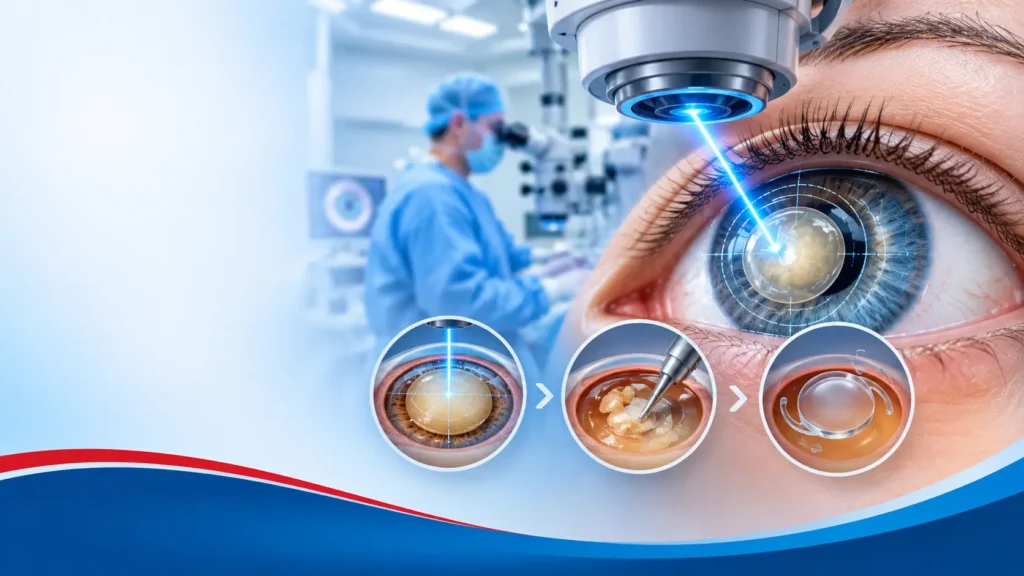
Laser cataract surgery, also called femtosecond laser-assisted cataract surgery (FLACS), uses a computer-guided laser to perform key steps of cataract surgery, such as making incisions and softening the cloudy lens. The lens is then removed and replaced with a clear artificial lens. It’s precise and safe, but large studies show visual results are similar to well-performed phaco cataract surgery.
In short, laser cataract surgery adds precision, phaco cataract surgery is the proven standard, and SICS cataract surgery suits advanced cataracts affordably.
Table of Contents
ToggleWhat Is a Cataract and When Does It Need Treatment?
A cataract is a clouding of the eye’s natural lens. The lens sits behind the coloured part of your eye (the iris) and focuses light onto the retina. When proteins in the lens clump together, light scatters and vision becomes hazy. Most cataracts develop slowly with age. Other causes include diabetes, long-term steroid use, eye injury, smoking, and heavy sun exposure. Some babies are born with a cataract. Common signs include:- Blurry, cloudy or dim vision
- Glare or halos around lights, especially at night
- Colours looking faded or yellowish
- Frequent changes in glasses power
What Is Laser Cataract Surgery and How Does It Work?
Laser cataract surgery is a modern form of cataract eye surgery. A femtosecond laser, guided by detailed 3D imaging of your eye, takes over several steps that a surgeon usually does by hand with a blade. The laser can:- Create the incisions in the cornea with high precision
- Open the lens capsule (capsulotomy) in a perfectly round, centred circle
- Soften and divide the cataract into small pieces for easier removal
- Make relaxing incisions to reduce mild astigmatism
Laser vs Phaco vs SICS: Which Cataract Surgery Is Right for You?
There are three main types of modern cataract surgery. All are effective, and the best choice depends on your eye, the type of cataract, and your budget.Phaco Cataract Surgery (Phacoemulsification)
Phaco surgery is the most widely used method worldwide, and it is the routine approach in most cataract surgery programmes. The surgeon makes a tiny 2 to 3 mm cut, breaks up the lens with ultrasound and removes it. A foldable lens is inserted through the same opening. Stitches are usually not needed, and the procedure often takes 15 to 20 minutes.Small Incision Cataract Surgery (SICS)
SICS cataract surgery removes the lens in one piece through a slightly larger, self-sealing tunnel cut. It needs less equipment, costs less, and works very well for hard, mature, or very dense cataracts. Small incision cataract surgery is widely used in high-volume eye care.Comparison Table
| Factor | Laser Cataract Surgery (FLACS) | Phaco Surgery | SICS |
| How the lens is opened | Femtosecond laser | Surgeon, by hand | Surgeon, by hand |
| Incision size | About 2 to 3 mm | About 2 to 3 mm | About 5.5 to 7 mm tunnel |
| Ultrasound energy | Lower | Standard | None |
| Astigmatism correction | Laser incisions or toric lens | Toric lens | Limited |
| Best suited for | Premium lenses, selected eyes | Most cataracts | Hard or mature cataracts |
| Relative cost | Highest | Moderate | Lowest |
Benefits and Limitations of Laser Cataract Surgery
Laser cataract surgery offers real advantages, but it isn’t the best choice for everyone.Key Benefits
Here’s where laser cataract surgery stands out:- Precise, repeatable incisions and a perfectly round capsule opening
- Less ultrasound energy, which may protect the delicate inner layer of the cornea
- Astigmatism correction during the same procedure
- Accurate lens positioning, helpful with premium multifocal or toric lenses
- A gentler approach for some dense cataracts or weak corneas
Limitations to Know
- Higher cost, and insurance may not cover the laser portion
- Not suitable for every eye, such as small pupils, corneal scarring or certain glaucoma cases
- Similar overall vision results to phaco, as shown in large trials such as the UK FACT study (2020)
- Slightly longer total procedure time, as the laser step is done first
Who Is a Good Candidate for Laser Cataract Surgery?
An ophthalmology department team will examine your eyes before recommending a technique. You may be a good candidate if you:- Want a premium lens, such as a multifocal or toric IOL
- Have astigmatism you’d like corrected at the same time
- Have a weak cornea, such as Fuchs’ dystrophy
- Have a dense cataract that needs gentler handling
Choosing the Right Lens for Your Eye Lens Surgery
Every cataract operation is also eye lens surgery, because the cloudy lens is replaced with an artificial one. Common lens types include:- Monofocal lens: Clear vision at one distance, usually far. You’ll likely need reading glasses.
- Toric lens: Corrects astigmatism along with the cataract.
- Multifocal or EDOF lens: Provides near, middle, and distance vision, reducing dependence on glasses.
Laser Cataract Surgery Procedure: Step by Step
Here’s what to expect on the day of laser cataract surgery:- Preparation: Eye drops dilate your pupil and numb the eye. You stay awake but comfortable.
- Laser stage: A gentle interface rests on your eye. The laser maps the eye and performs its steps in under a minute.
- Lens removal: The surgeon removes the softened cataract with a fine probe.
- Lens implant: A folded artificial lens is placed and unfolds inside the eye.
- Finishing: The tiny incisions usually seal on their own without stitches.
Post Cataract Surgery Recovery: What to Expect
Most people notice clearer vision within one to two days after laser cataract surgery. Full healing takes about four to six weeks.Recovery Timeline
- Day 1: Follow-up check. Mild grittiness or watering is normal.
- Week 1: Most daily activities resume. Use eye drops exactly as prescribed.
- Weeks 2 to 4: Vision continues to settle. Avoid swimming and dusty places.
- Weeks 4 to 6: Eyes stabilise. Your doctor may prescribe new glasses if needed.
Post Cataract Surgery Care Tips
- Don’t rub or press your eye
- Wear the protective shield while sleeping, as advised
- Avoid eye makeup, swimming, and heavy lifting for about two weeks
- Wear sunglasses outdoors
Possible Risks and Warning Signs
Laser cataract surgery and standard techniques are among the safest operations performed, but no surgery is risk-free. Possible issues include inflammation, raised eye pressure, infection, and, rarely, retinal detachment. Some people develop clouding behind the new lens months or years later. This is called posterior capsule opacification. It’s easily treated with a quick, painless YAG laser. Contact your eye doctor urgently if you have worsening pain, sudden vision loss, increasing redness, or flashes and new floaters.Laser Cataract Surgery Cost: What Affects the Price?
Laser cataract surgery usually costs more than phaco or SICS. The final price depends on:- The surgical technique chosen
- The type of intraocular lens (monofocal, toric, or multifocal)
- Whether one or both eyes are treated
- Pre-surgery tests and follow-up visits
- Your insurance or cashless coverage
Congenital Cataract Treatment in Children
Some babies are born with a cataract or develop one in early childhood. Early detection is vital because a cloudy lens can stop the brain from learning to see properly, causing lazy eye (amblyopia). Congenital cataract treatment often involves surgery within the first few months of life for dense cataracts. Children then need glasses, contact lenses or an implanted lens, plus regular follow-up. Laser-assisted surgery is not routinely used in infants. A paediatric eye care specialist should assess any child with a white reflex in the pupil or unusual eye movements.Frequently Asked Questions
Is laser cataract surgery better than traditional cataract surgery?
Not always. Laser cataract surgery is more precise for certain steps, but large studies show overall vision results are similar to phaco surgery. The best option depends on your eye and lens choice.How long does it take to recover from laser cataract surgery?
Most people see clearly within one to two days and return to normal activities within a week. Complete healing usually takes four to six weeks.Is laser cataract surgery painful?
No. Numbing drops keep the eye comfortable. You may feel slight pressure during the laser step and mild grittiness for a day or two afterwards.Can a cataract come back after surgery?
A cataract can’t return because the natural lens is removed. Some people develop clouding behind the new lens, which is treated with a quick YAG laser.What is the difference between phaco and laser cataract surgery?
In phaco surgery, the surgeon makes the incisions and opens the lens by hand. In laser cataract surgery, a femtosecond laser performs these steps before the lens is removed.Will I need glasses after cataract surgery?
It depends on the lens chosen during laser cataract surgery or phaco. With a monofocal lens, you’ll likely need reading glasses. Multifocal or EDOF lenses can reduce your need for glasses.When is the right time for cataract surgery?
The right time is when blurry vision starts affecting daily life, such as reading, driving or working.Conclusion
Laser cataract surgery, phaco surgery, and SICS can all restore clear vision, and the right choice depends on your eyes, lens needs, and budget. For a thorough eye assessment and expert guidance on cataract surgery, visit SKS Hospital in Mathura.
#Benefits and Limitations of Laser Cataract Surgery
#Eye Lens Surgery
#Laser Cataract Surgery
#Laser Cataract Surgery Procedure
#Phaco Cataract Surgery
#Small Incision Cataract Surgery
This article is for general awareness and is not a substitute for medical advice. Please consult a doctor for diagnosis and treatment.